
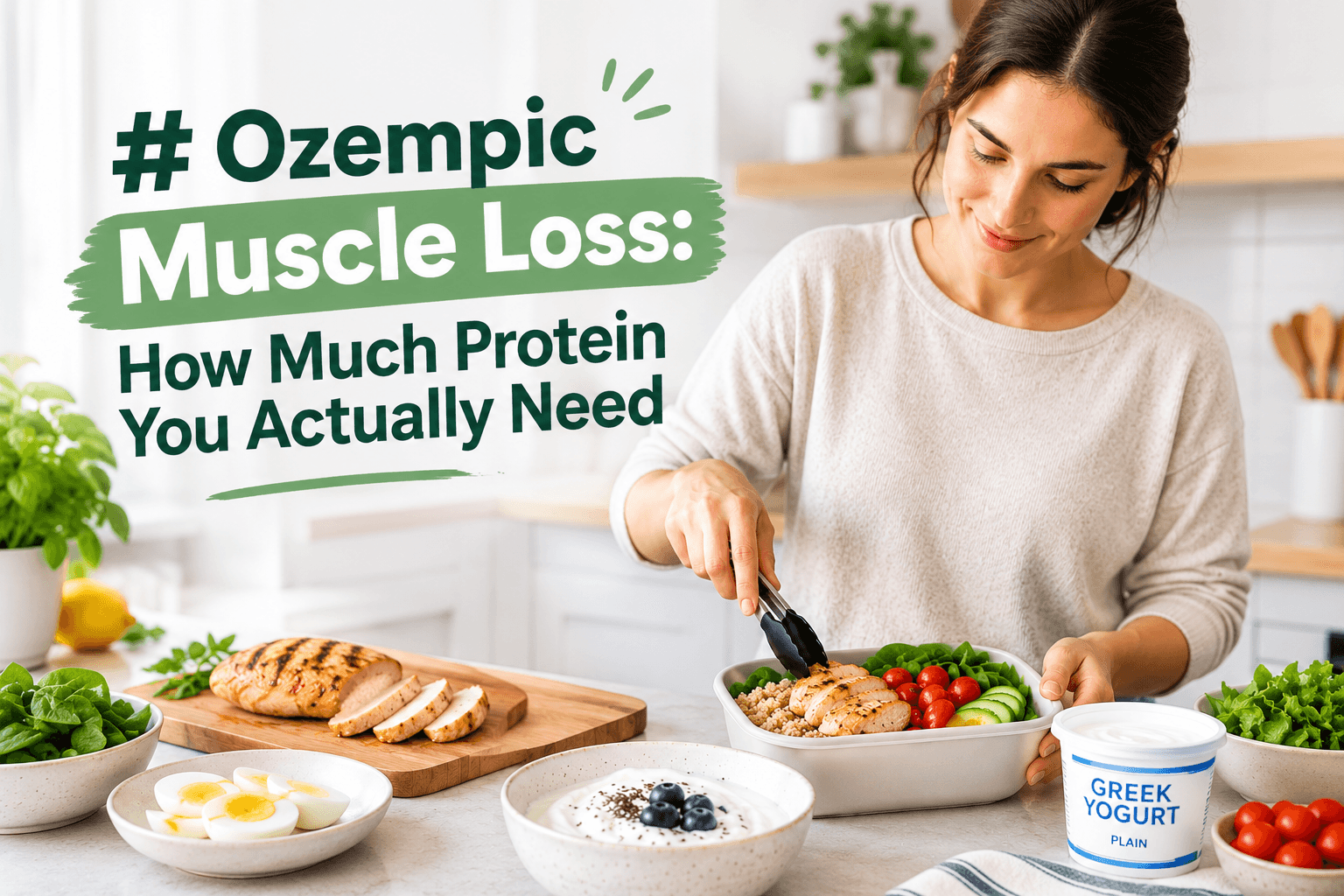
For most people starting semaglutide (Ozempic, Wegovy) or tirzepatide (Mounjaro, Zepbound), the appeal is simple: the drugs quiet the constant mental noise around food, and the number on the scale starts moving. What gets far less attention is Ozempic muscle loss: the fact that not all of that weight loss is fat. A meaningful share can be muscle, and losing too much of it can undercut the very metabolic and strength benefits people hope to gain from treatment.
Registered dietitians who work with GLP-1 patients are increasingly vocal about one fix: eat more protein than you think you need, on purpose, before appetite loss decides for you.

What Causes Ozempic Muscle Loss During Weight Loss
GLP-1 receptor agonists work by slowing digestion and dialing down appetite signals in the brain, which is exactly why they're so effective for weight loss. Clinical trials of semaglutide, including the landmark STEP 1 trial, confirmed that participants lost substantial body weight over roughly a year and a half of treatment [1].
The catch is that weight loss from any source food, drugs, or surgery never comes exclusively from fat. A 2025 case series published in SAGE Open Medical Case Reports by exercise scientists Grant Tinsley and Spencer Nadolsky notes that across recent trials of GLP-1 and dual GLP-1/GIP therapies, lean soft tissue has accounted for roughly 26% to 40% of total weight lost [2]. A large 2026 real-world analysis of body-composition data from nearly 8,000 patients found that tirzepatide users lost meaningfully more lean body mass than semaglutide users over time, an excess loss of roughly 1 to 2 percentage points at each check-in point across 12 months. That data comes from routine clinical measurements rather than a controlled trial, so it's not the final word, but it's a real, measurable signal worth knowing about[3].
Why Appetite Suppression Makes This Worse
Losing lean mass during weight loss is normal to some degree. The problem with GLP-1 medications specifically is that appetite suppression can be so strong that total food intake and protein along with it drops faster than most people realize. If someone wasn't eating quite enough protein before starting treatment, a smaller appetite makes the gap wider, and the body increasingly turns to muscle tissue to help make up the shortfall.
How Much Protein on Ozempic or Wegovy Do Dietitians Recommend?
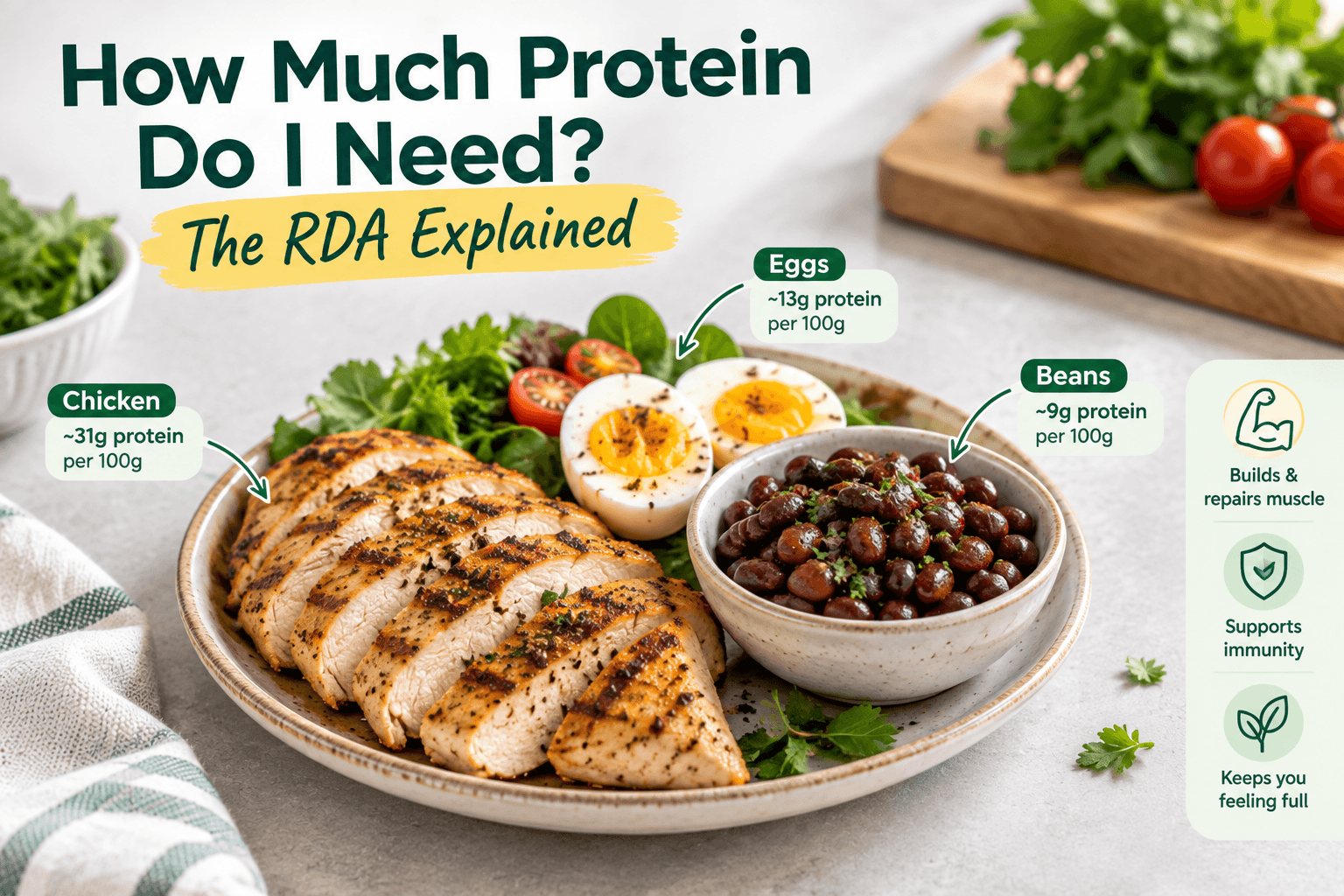
The general dietary guideline for protein, 0.8 grams per kilogram of body weight, was built to prevent deficiency, not to protect muscle during active, medication-driven weight loss. For that reason, most registered dietitians working in obesity medicine recommend a noticeably higher target.
Katelyn Tribble, a registered dietitian and certified obesity and weight management specialist at Orlando Health Jewett Orthopedic Institute, explains that GLP-1 drugs work by increasing insulin activity, slowing digestion, and reducing food-related cravings, all of which substantially lower intake, including protein [4]. To offset that, dietitians commonly recommend:
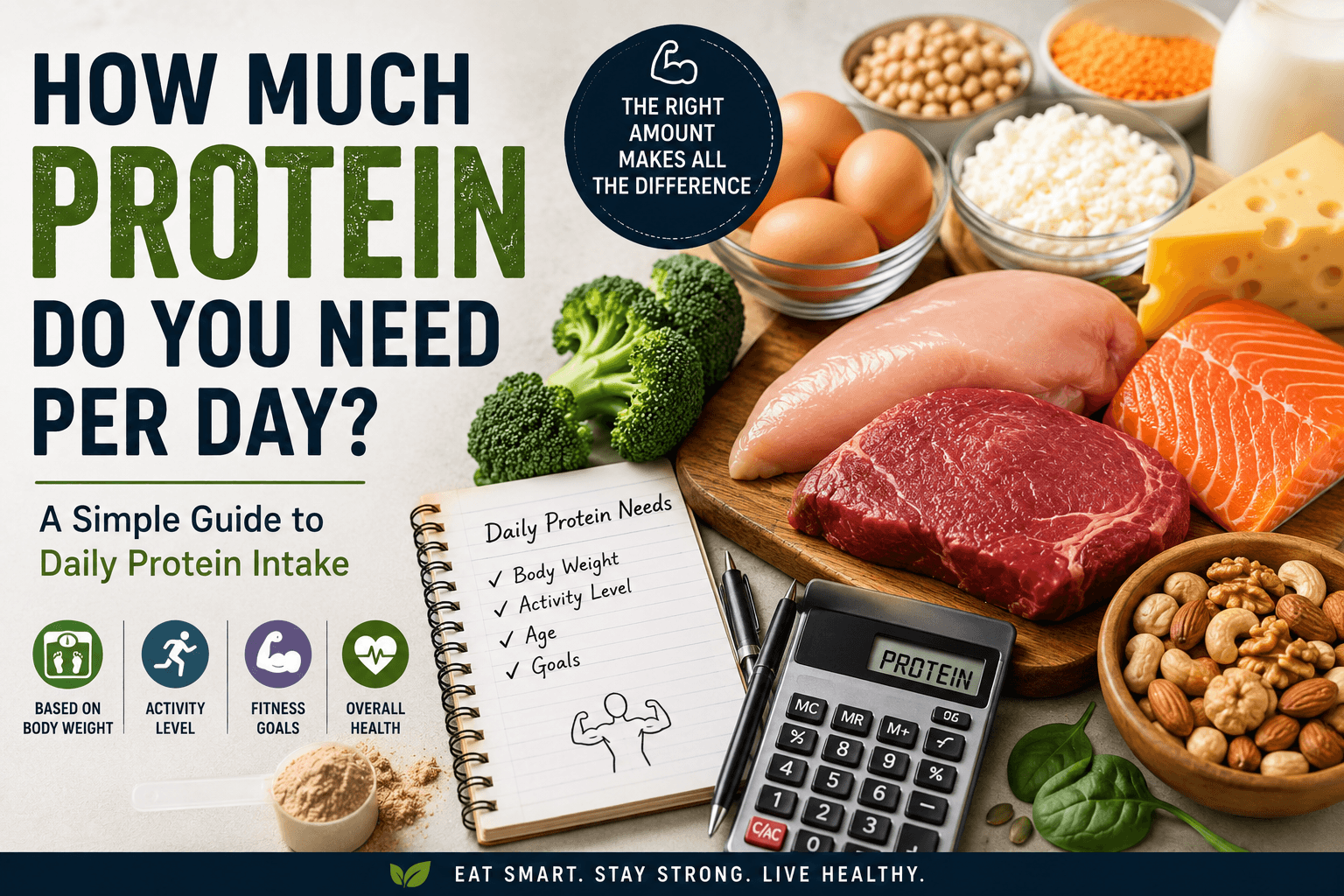
1.2 to 1.6 grams of protein per kilogram of body weight per day as a baseline for people losing weight on GLP-1 medications
Up to 2.0 grams per kilogram for those also doing regular resistance training
Protein guidelines used in obesity-treatment trial protocols echo this range, citing World Health Organization recommendations of at least 1.2 g/kg/day to support anabolism during calorie restriction [5]
For a person weighing 80 kilograms (about 176 pounds), that translates to roughly 96 to 128 grams of protein a day, noticeably more than the 64 grams the standard RDA would suggest.

Does the Number Change With Resistance Training?
Yes. The ongoing LEAN-PREP randomized controlled trial, a six-month study enrolling adults starting semaglutide or tirzepatide, is specifically testing whether resistance exercise, higher protein intake, or both together do the best job of preserving lean mass, and has set its protein target at 1.6 g/kg/day for participants in the protein-focused study arms [6]. If you're lifting weights or doing structured resistance training multiple times a week, aiming toward the higher end of the range or slightly above it is a reasonable, evidence-aligned choice.
What the Research Actually Shows About Protein Protecting Muscle
Large-scale randomized trials testing protein intake specifically during GLP-1 treatment are still limited, but the early evidence is encouraging. In the Tinsley and Nadolsky case series, three patients on semaglutide or tirzepatide who combined resistance training three to five days a week with higher protein intake saw dramatically different outcomes than the population averages: two of the three patients actually gained lean soft tissue while losing significant total weight, and the third lost only a small fraction of their total weight as muscle [2].
That's a small, uncontrolled study, and the authors are careful to note it can't prove cause and effect. But it lines up with decades of separate research on protein and muscle protein synthesis during any calorie deficit, and it's part of why dietitians are comfortable recommending higher protein intake now rather than waiting for larger trials to finish.
Practical Ways to Hit Your Protein Target When Your Appetite Is Low
Hitting 100+ grams of protein a day is hard enough on a normal appetite. On a GLP-1 medication, where a few bites can feel like a full meal, it takes real intention.
Prioritize Protein First, Not Last
When you sit down to eat, start with the protein on your plate before anything else. If your appetite fades halfway through the meal, as it often does on these medications, you'll have gotten the most important part in first.
Choose Dense, Well-Tolerated Sources
Foods that pack protein into a small volume are especially useful when appetite is limited: eggs, Greek yogurt, cottage cheese, tofu, fish, and lean poultry. Many people on GLP-1 medications tolerate liquid protein such as a protein shake or a glass of milk better than solid food, particularly on days when nausea is more noticeable.
Spread It Across the Day
Rather than trying to eat one large high-protein meal, aim for roughly 25 to 30 grams at each meal. Muscle-building signals in the body respond better to protein spread across the day than to the same total amount eaten all at once.
Should You Add Resistance Training Too?
Protein alone helps, but it works best alongside resistance exercise. Even two to three short strength-training sessions a week using body weight, resistance bands, or light weights give your body a reason to hold onto the muscle you're feeding. Combined with adequate protein, this pairing is currently the most evidence-backed strategy for preserving lean mass during GLP-1 treatment.

When to Talk to Your Doctor or Dietitian
If you're losing weight quickly, feeling notably weaker, or struggling to eat enough of anything protein, it's worth raising with your prescribing doctor or a registered dietitian. They can check whether your dose, meal timing, or overall nutrition plan needs adjusting, and in some cases recommend protein supplementation or a temporary change in medication dosing.

Frequently Asked Questions (FAQs)
Q1: Does everyone lose muscle on Ozempic or Wegovy?
Some degree of lean mass loss is common during any significant weight loss, medication-assisted or not. How much muscle you lose depends heavily on your protein intake and activity level, not just the medication itself.
Q2: Can protein shakes help if I can't eat much solid food?
Yes. Many people on GLP-1 medications find liquid protein easier to tolerate than solid meals, especially during the first few months of treatment or after a dose increase.
Q3: Is 1.6 grams of protein per kilogram too much for someone with kidney issues?
People with kidney disease should not increase protein intake without medical guidance, since higher protein can be inappropriate depending on kidney function. Always check with your doctor first.
Q4: Will eating more protein slow down my weight loss?
No. Protein is the least likely macronutrient to be stored as fat and tends to be more filling than carbohydrates or fat, which can support weight loss rather than work against it.
Q5: Do I need to count grams every day?
Not necessarily forever, but tracking for a week or two is a useful way to see whether you're consistently hitting your target, since appetite suppression makes it easy to underestimate how little you're actually eating.
Key Points
Ozempic muscle loss is real: recent research shows lean soft tissue can account for roughly 26% to 40% of total weight lost on GLP-1 medications [2][3].
The standard protein RDA (0.8 g/kg/day) is not enough during GLP-1-driven weight loss; dietitians recommend 1.2 to 1.6 g/kg/day as a baseline, up to 2.0 g/kg/day with resistance training [4][5].
Appetite suppression is the root problem; a smaller appetite often means protein intake drops before you notice.
Small case-series evidence suggests higher protein combined with resistance training can preserve or even increase lean mass during treatment [2].
Prioritizing protein first at meals, choosing dense and well-tolerated sources, and spreading intake across the day all make hitting your target easier.
Resistance training 2–3 times a week alongside adequate protein is currently the most evidence-backed strategy for protecting muscle on Ozempic or Wegovy.
Talk to your doctor or a registered dietitian if you're losing weight quickly or feeling unusually weak, especially before making large changes to protein intake if you have kidney disease.
References
Wilding JPH, Batterham RL, Calanna S, et al. Once-Weekly Semaglutide in Adults with Overweight or Obesity. New England Journal of Medicine, 2021;384:989–1002.
Tinsley GM, Nadolsky SR. Preservation of Lean Soft Tissue During Weight Loss Induced by GLP-1 and GLP-1/GIP Receptor Agonists: A Case Series. SAGE Open Medical Case Reports, 2025.
Murugadoss, K., Venkatakrishnan, A. J., Soundararajan, V. "Greater lean-body-mass decline with tirzepatide than semaglutide in routine care, revealed by body-composition digital phenotyping." medRxiv, 2026 (preprint). medrxiv.org
Tribble K, as quoted in: GLP-1 Muscle Loss: How to Preserve Lean Mass on Ozempic and Other GLP-1s. U.S. News & World Report, 2026.
Safety and Efficacy of Bimagrumab and Semaglutide in Adults Who Are Overweight or Obese — trial protocol citing World Health Organization protein guidelines, 2015.





Leave a comment